How to Choose the Right Hdpe Geomembrane for Your Project?
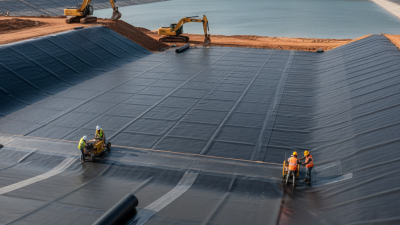
Choosing the right HDPE geomembrane for your project is crucial. Dr. Emily Carter, a leading expert in geomembrane technology, emphasizes, “The selection of materials can make or break your project.” HDPE geomembranes are versatile and widely used for various applications, including landfills, ponds, and reservoirs.
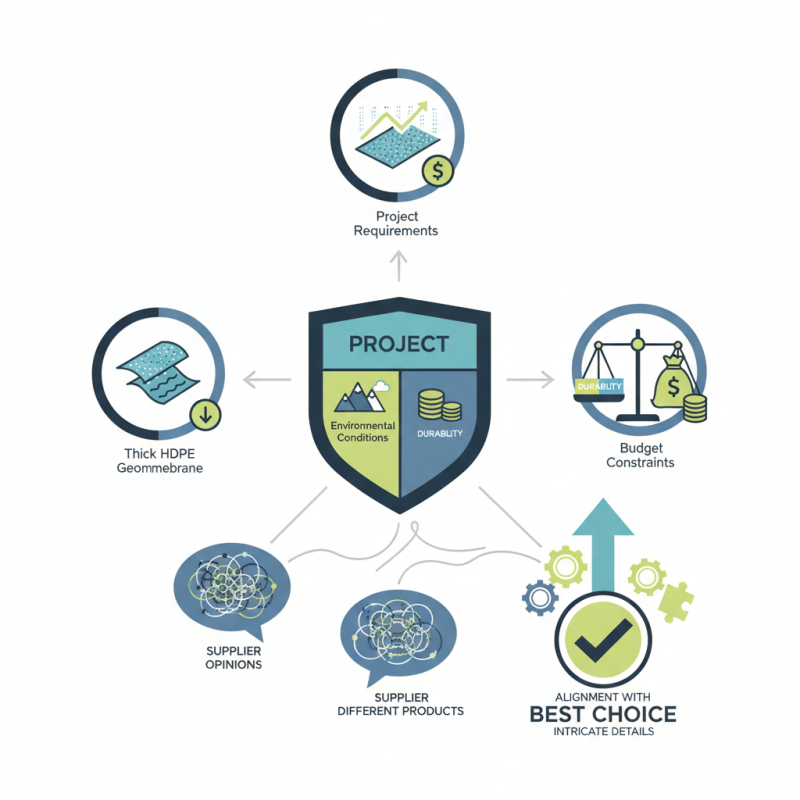
Many factors influence the choice. Project requirements, environmental conditions, and budget constraints all play a role. For instance, a thick HDPE geomembrane may perform better in harsh environments. Yet, it often comes at a higher cost. Sometimes, project managers find themselves weighing durability against expense, which is not always straightforward.
A perfect choice does not always exist. You might face contrasting opinions from various suppliers. Each one promotes different products, justifying their claims. Evaluating these options can feel overwhelming. In the end, the best choice aligns with project needs while considering all these intricate details.
Understanding HDPE Geomembranes and Their Applications
HDPE geomembranes are essential in various applications, from landfill liners to water containment systems. According to a report by Research and Markets, the global geomembrane market is expected to reach $3.5 billion by 2025, driven by the growing demand for efficient environmental protection solutions. These membranes are made from high-density polyethylene, known for its durability and resistance to chemicals.
When selecting an HDPE geomembrane, consider its thickness. Typically, thickness ranges from 0.5 mm to 2.5 mm. Thicker membranes offer better puncture resistance. Over time, however, too much thickness can complicate installation, leading to unnecessary costs. The material’s UV resistance is also crucial. Prolonged exposure to sunlight can degrade a geomembrane's integrity.
Flexibility plays a significant role in application success. A more flexible geomembrane can conform to uneven surfaces, reducing the risk of leaks. However, this can sometimes come with a trade-off in strength. The balancing act between flexibility and durability is often challenging. Misjudging this can lead to serious project setbacks. Hence, understanding your project’s specific requirements is vital.
Assessing Project Requirements for Geomembrane Selection
When selecting the right HDPE geomembrane for a project, it's essential to assess the specific requirements. Start by understanding the environmental conditions. Consider factors like temperature, pressure, and exposure to chemicals. Each project has unique needs that can significantly affect performance.
Additionally, evaluate the project's scale and application. Is it a landfill, pond, or another application? Different environments require different thicknesses and properties. Look for metrics such as tensile strength and puncture resistance. These can guide you in choosing a reliable material.
It’s also important to reflect on the installation process. Poor installation can lead to future failures, regardless of the geomembrane quality. Train your team properly and consider hiring experts if needed. Skipping this step can bring unexpected complications later on. Careful planning and consideration of these factors help ensure the success of your project.
How to Choose the Right Hdpe Geomembrane for Your Project? - Assessing Project Requirements for Geomembrane Selection
| Project Type |
Required Thickness (mm) |
Seam Strength (N/mm) |
Temperature Resistance (°C) |
Chemical Resistance |
| Landfill Liner |
1.5 |
25 |
-30 to 60 |
High |
| Aquaculture Pond |
1.0 |
20 |
-20 to 50 |
Medium |
| Mining Applications |
2.0 |
30 |
-40 to 70 |
Very High |
| Stormwater Management |
1.5 |
22 |
-10 to 50 |
High |
| Waste Water Treatment |
1.8 |
28 |
-15 to 55 |
High |
Key Properties to Consider When Choosing HDPE Geomembranes
When selecting HDPE geomembranes for a project, several key properties come into play. One of the most crucial factors is the thickness of the geomembrane. Typically, thicknesses range from 1.0 to 2.5 mm, with thicker variants providing enhanced durability and puncture resistance. Reports show that a thickness of 2.0 mm can reduce failure rates significantly in landfill applications.
Another important consideration is the UV resistance of the geomembrane. Prolonged exposure to sunlight can lead to polymer degradation. High-quality HDPE options can withstand UV exposure for several years. Industry standards indicate that UV-stabilized geomembranes perform significantly better under harsh environmental conditions.
**Tips:** Always verify the tensile strength values. Values above 20 MPa are desirable for most applications. Additionally, consider the flexibility of the material. A geomembrane that retains its flexibility in varying temperatures is more adaptable.
Next, pay attention to chemical resistance. HDPE geomembranes are generally resistant to a wide range of chemicals. However, specific chemicals may require specialized materials. It’s essential to perform a compatibility test. A mismatch can lead to failures over time.
**Tips:** Check for project-specific guidelines on chemical exposure. Remember, not all HDPE geomembranes are created equal regarding chemical resistance. It’s vital to research and consult with knowledgeable sources in the industry.
Key Properties to Consider When Choosing HDPE Geomembranes
This bar chart illustrates the key properties to consider when choosing HDPE geomembranes, including thickness, tensile strength, elongation, UV resistance, and puncture resistance. Each property is crucial for ensuring the durability and effectiveness of geomembranes in various applications.
Evaluating Environmental Conditions for HDPE Geomembrane Use
When selecting an HDPE geomembrane, evaluating environmental conditions is crucial. Temperature fluctuations impact the material’s performance. Extreme temperatures can lead to brittleness or softening. Consider local climate patterns. Will the geomembrane be exposed to UV rays? Prolonged exposure can degrade the material.
Soil conditions also matter. Assess the pH and chemical composition. Some soils may contain substances that could compromise the geomembrane. Monitoring local wildlife is wise. Animals can damage the membrane if they burrow or scratch it. Observing such behaviors can prevent future issues.
Installation conditions present their own challenges. Is the site accessible? Poor access can complicate the deployment of geomembranes. Ensure the ground is level and free from sharp objects. Inspection after installation is vital. Any potential weaknesses should be identified early on. These factors require thorough consideration to ensure project success.
Comparing Different HDPE Geomembrane Manufacturers and Products
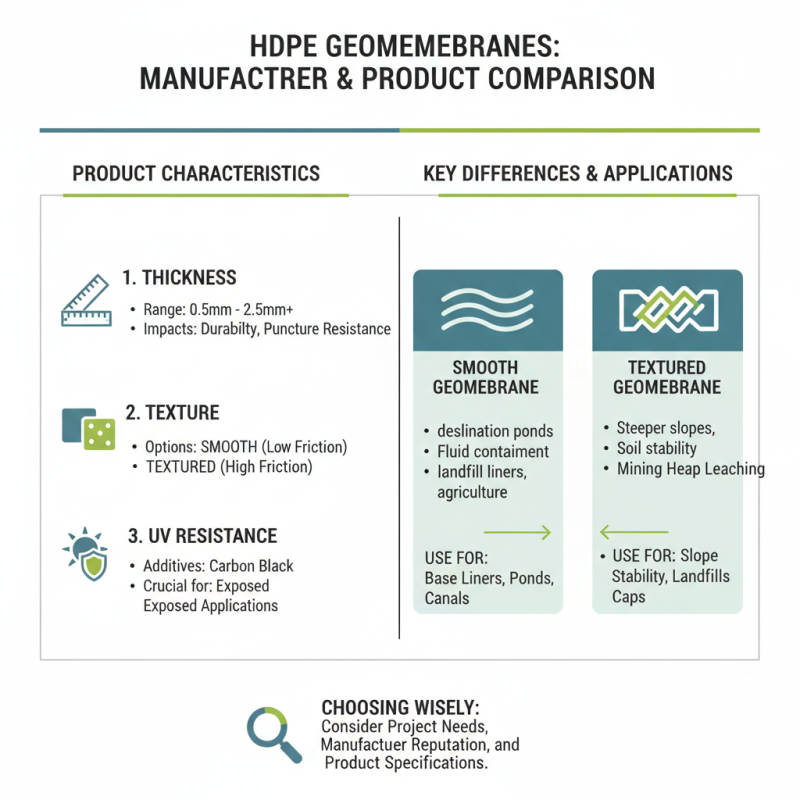
When choosing an HDPE geomembrane, understanding product differences is crucial. Various manufacturers offer unique options. Thickness, texture, and UV resistance vary significantly among products. You might prefer a smooth surface for certain applications. In contrast, a textured option could enhance stability in others.
Evaluating manufacturers requires careful consideration. Not all use the same production techniques. Some may prioritize durability over cost. Others might achieve lower prices but compromise quality. Look for transparency in their testing methods. Research their history and customer reviews, as this can provide insight into performance.
Expect to encounter challenges during your evaluation. Some manufacturers have inconsistent product lines. Others might lack sufficient data on long-term performance. It's essential to ask the right questions and gather multiple samples. Trust your instincts, and don't hesitate to rethink initial choices based on new information.